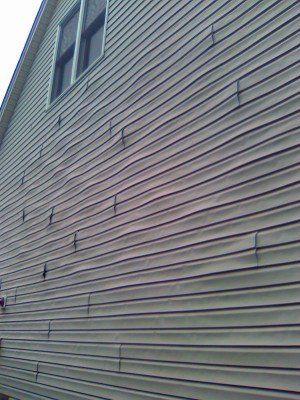
Why Quad Cities Temperature Swings Can Warp Vinyl Siding (And How to Prevent It)
Why Quad Cities Temperature Swings Can Warp Vinyl Siding (And How to Prevent It)
If you live in the Quad Cities, you’ve probably experienced the classic Midwest weather whiplash: a cold snap one week, a mild sunny afternoon the next, then wind and sleet rolling in like it owns the place. Those temperature swings aren’t just uncomfortable—they can quietly stress your home’s exterior, especially vinyl siding.
Vinyl siding is a durable, low-maintenance option for many homes in Rock Island, Moline, Davenport, Bettendorf, and Milan, but it’s designed to move. When it’s installed properly, that movement is harmless. When it’s installed too tight, damaged, or already aging, that movement can show up as warping, buckling, cracking, or loose panels—often right before spring storms and heavy rain arrive.
How Vinyl Siding Reacts to Midwest Weather
Vinyl expands when it warms up and contracts when it cools down. In the Midwest, that expansion and contraction can happen repeatedly in short periods of time.
Why quick temperature changes matter
When temperatures swing rapidly—think a sunny 45°F day followed by a 10°F night—the siding is constantly moving. Over time, that movement can:
Loosen fasteners
Stress seams and corners
Pull panels slightly out of alignment
Create gaps for wind-driven rain
Wind makes it worse
Quad Cities wind can push behind siding, especially in exposed areas and on taller walls. If panels are already loose or improperly fastened, strong gusts can lift sections and increase the chance of moisture getting behind the siding.
What “Warping” Actually Looks Like
Siding problems aren’t always obvious from the street. Warping may show up as subtle ripples or waves that homeowners often ignore.
Common signs homeowners notice
A “wavy” look on sunny days
Panels that appear to bulge outward
Seams that don’t sit flush
Corners that look pulled or stretched
Pieces that rattle or flutter in wind
These issues are more common on walls with strong sun exposure, but in the Midwest they can happen anywhere—especially after years of freeze, thaw, and storm cycles.
The #1 Cause: Siding Installed Too Tight
Vinyl siding is not meant to be nailed down like wood. It needs room to move.
What proper installation allows
A correct installation typically:
Leaves a small gap at nail heads
Uses the siding’s built-in “nailing hem” correctly
Allows panels to slide slightly left and right
Accounts for expansion around windows, doors, and trim
If the nails are driven too tightly, the siding can’t move—so it buckles instead.
Why buckling can lead to bigger issues
Buckling isn’t just cosmetic. When panels deform, they can:
Create openings where water can get behind the system
Compromise house wrap and insulation performance
Lead to wood rot around windows or sheathing
Increase the chance of mold in wall cavities
Moisture Behind Siding: The Silent Problem
Most siding issues become serious when water gets where it shouldn’t.
How moisture gets behind siding
Moisture can enter behind siding through:
Gaps at J-channel or trim
Loose panels from wind
Failed caulk around penetrations
Missing kick-out flashing where rooflines meet walls
In the Midwest, that moisture may freeze, expand, and create bigger gaps over time.
Why spring is the danger zone
After a winter of contraction and stress, spring brings rain, wind, and storms. If your siding system has weak points, wind-driven rain is one of the fastest ways to discover them—usually after it reaches interior drywall.
Areas Most Likely to Show Damage
Certain parts of the home take more impact from wind, water, and temperature changes.
High-risk siding zones
Around windows and doors
Behind gutters/downspouts that overflow
On tall gable walls
Where rooflines intersect walls (especially step flashing zones)
Near decks or porches where splashback occurs
If you’re seeing warping in one location, it’s worth checking those other areas too.
What You Can Do Right Now
You don’t need to panic—many siding problems are fixable if caught early.
Quick homeowner checklist
Walk the perimeter and look for waves or gaps
Check corners and trim for separation
Look for missing or damaged caulk around penetrations
Note any panels that rattle in wind
Watch for water stains near interior windows after rain
When to call a pro
If you see buckling that doesn’t settle back down when temperatures change, or if you notice gaps near windows or roofline intersections, it’s time for an inspection. A professional can determine whether it’s:
A simple re-fastening or trim correction
A localized repair
A moisture issue requiring more targeted work
Or siding that’s reaching end-of-life
The Value of Local Experience
Midwest homes deal with unique stresses: wind, ice, summer heat, and rapid temperature swings. A local contractor understands how siding systems behave here—and what details protect your home when storms hit.
Schedule a Free Siding Inspection
If your siding looks wavy, loose, or “off” after another Midwest season, it’s worth getting a professional opinion. Twin Bridge Roofing & Construction is a licensed and insured roofing & siding contractor serving the Quad Cities, and we offer free, no-obligation inspections to identify issues early—before moisture damage spreads.
📞 Call or text 309-948-4126 to schedule your free inspection, or visit roofqc.com to request an appointment online.
